You back out of a parking spot, hear that sickening crunch, and there it is: a dent in your door. Now you have a decision to make. The question of paintless dent repair vs traditional bodywork comes up on almost every estimate we write at 360PDR, and the right answer depends entirely on the dent in front of us. One method keeps your factory paint untouched and gets you back on the road fast. The other rebuilds the panel from the metal up. Knowing the difference helps you ask better questions and avoid paying for more work than your car actually needs.
Below we break down how each approach works, how they stack up on cost and time, and the clear signals that tell us which one a vehicle needs. Whether you're in Carrollton, Princeton, or anywhere across the Dallas-Fort Worth metroplex, the logic is the same.
What Is Paintless Dent Repair (PDR)?
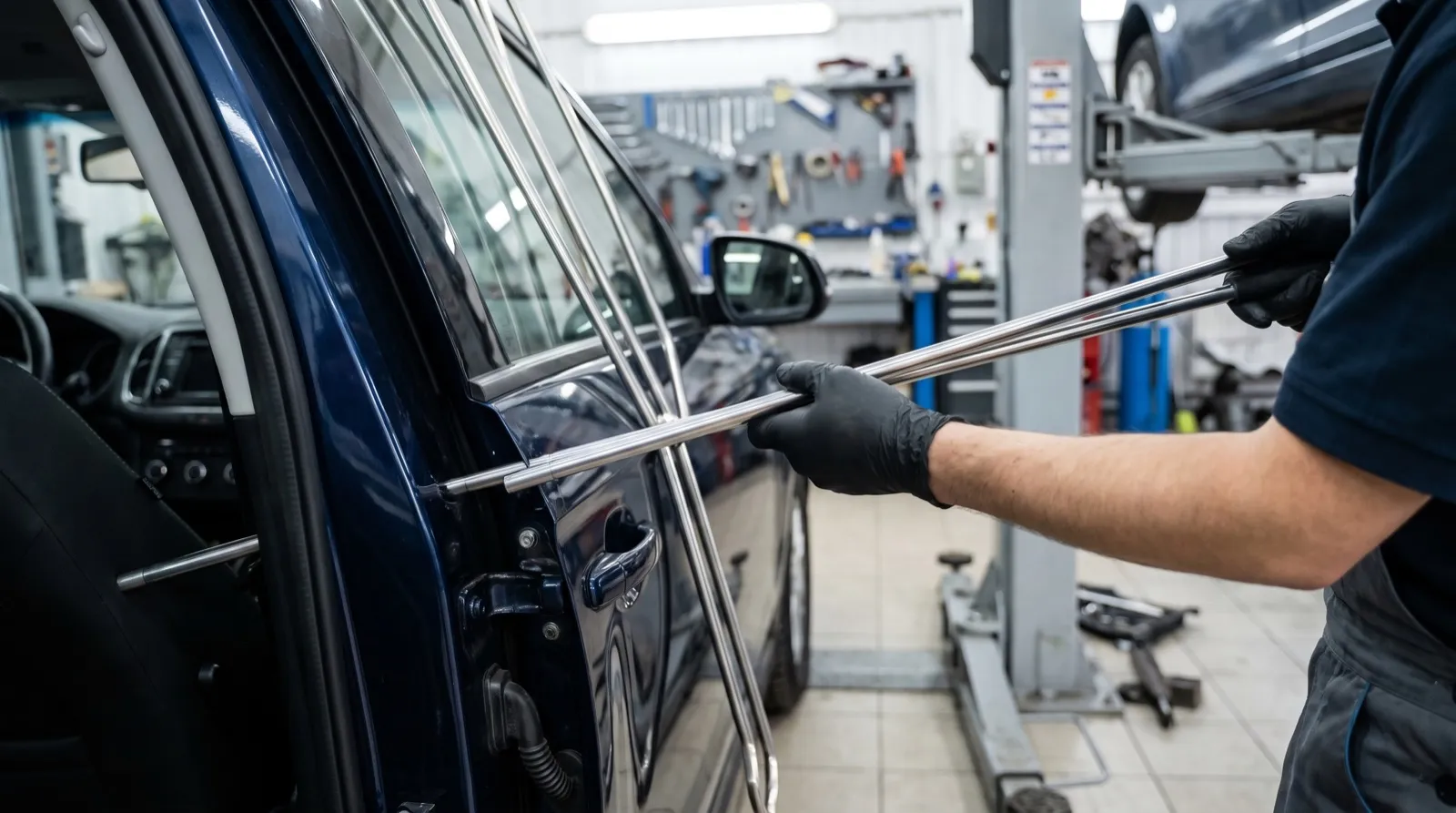
Paintless dent repair is exactly what the name says: we remove the dent without touching the paint. A trained technician reaches behind the panel with specialized rods and picks, then slowly works the metal back to its original shape. Small dents on the outside of the panel may get a gentle push from the front with a tab and a slide hammer instead. The whole time, the tech reads a reflection board to watch how the light bends across the surface, which is how they know the contour is right down to the millimeter.
The key detail is that nothing gets sanded, filled, or sprayed. Your original finish stays exactly as the factory applied it. That single fact is why PDR has become the preferred method for a huge share of dent removal work, especially the small, clean dents that make up most everyday damage.
What Traditional Bodywork Involves
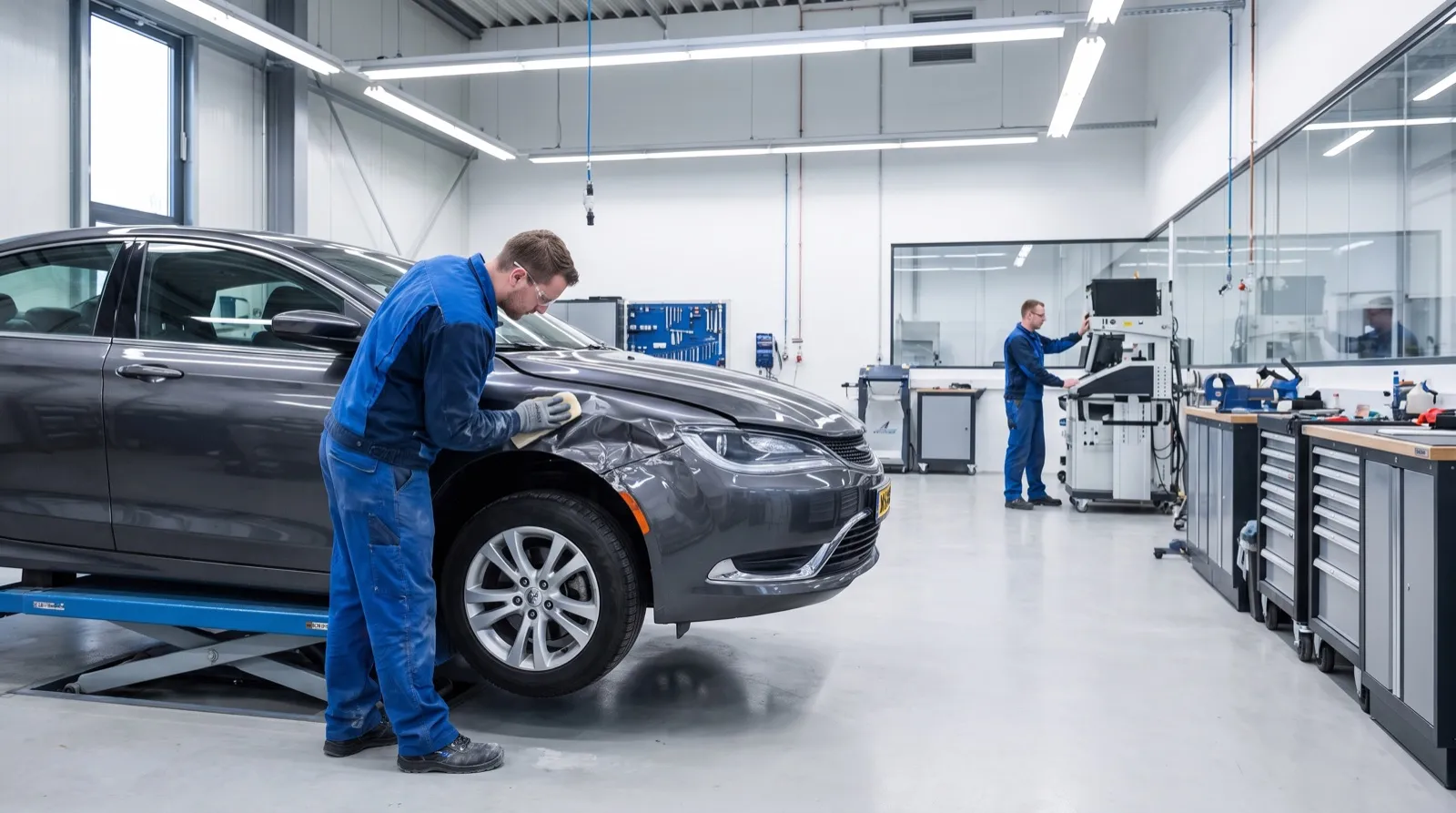
Traditional bodywork is the process most people picture when they think of an auto body shop. When a dent is too sharp, too deep, or the paint is broken, the metal can't simply be massaged back into place. Instead, the tech works the panel as close to shape as possible, then applies body filler to rebuild the surface. That filler gets sanded smooth, primed, and then repainted to match the rest of the car. The final step is blending, where the new paint is feathered into the surrounding panels so the repair disappears.
Done well, body filler and repaint work looks flawless. But it's a bigger job with more steps, and it permanently changes that section of the car from factory paint to shop-applied paint. Color matching modern finishes, especially metallics and pearls, takes real skill, which is one reason quality matters so much on this kind of repair.
Paintless Dent Repair vs Traditional Bodywork: The Comparison
Here's how the two methods compare on the things drivers actually care about:
- Cost. PDR usually costs less for the same visible dent because there's no filler, no primer, no paint, and less labor time. Traditional bodywork carries the added materials and hours that repainting and blending require.
- Time. Many PDR jobs are done in a day or two. A repaint needs prep, spray, cure, and blend time, so it often keeps your car in the shop noticeably longer.
- Factory paint. This is the big one. PDR preserves your original factory paint completely. Traditional bodywork replaces it with new paint on the repaired area.
- Resale value. A car with all its original paint tends to hold value better. Buyers and appraisers often run a paint meter, and untouched panels are a selling point.
- Durability. Both last when done right. Factory paint that was never disturbed simply has nothing to fail, while a quality repaint depends on the shop's prep and product.
When PDR is an option, it wins on most of these counts. The catch is that it isn't always an option, and pretending otherwise leads to bad repairs.
Not Sure Which Your Car Needs?
Send us a few photos of the damage and we'll tell you honestly whether PDR will do the job or whether bodywork is the smarter call. Free estimates across Carrollton, Princeton, and DFW.
Request a Free Quote Or call us now: (972) 880-8083When PDR Is the Right Call
Paintless dent repair shines when the metal is dented but the paint is still intact. The best candidates share a few traits:
- Door dings from parking lots and tight garages.
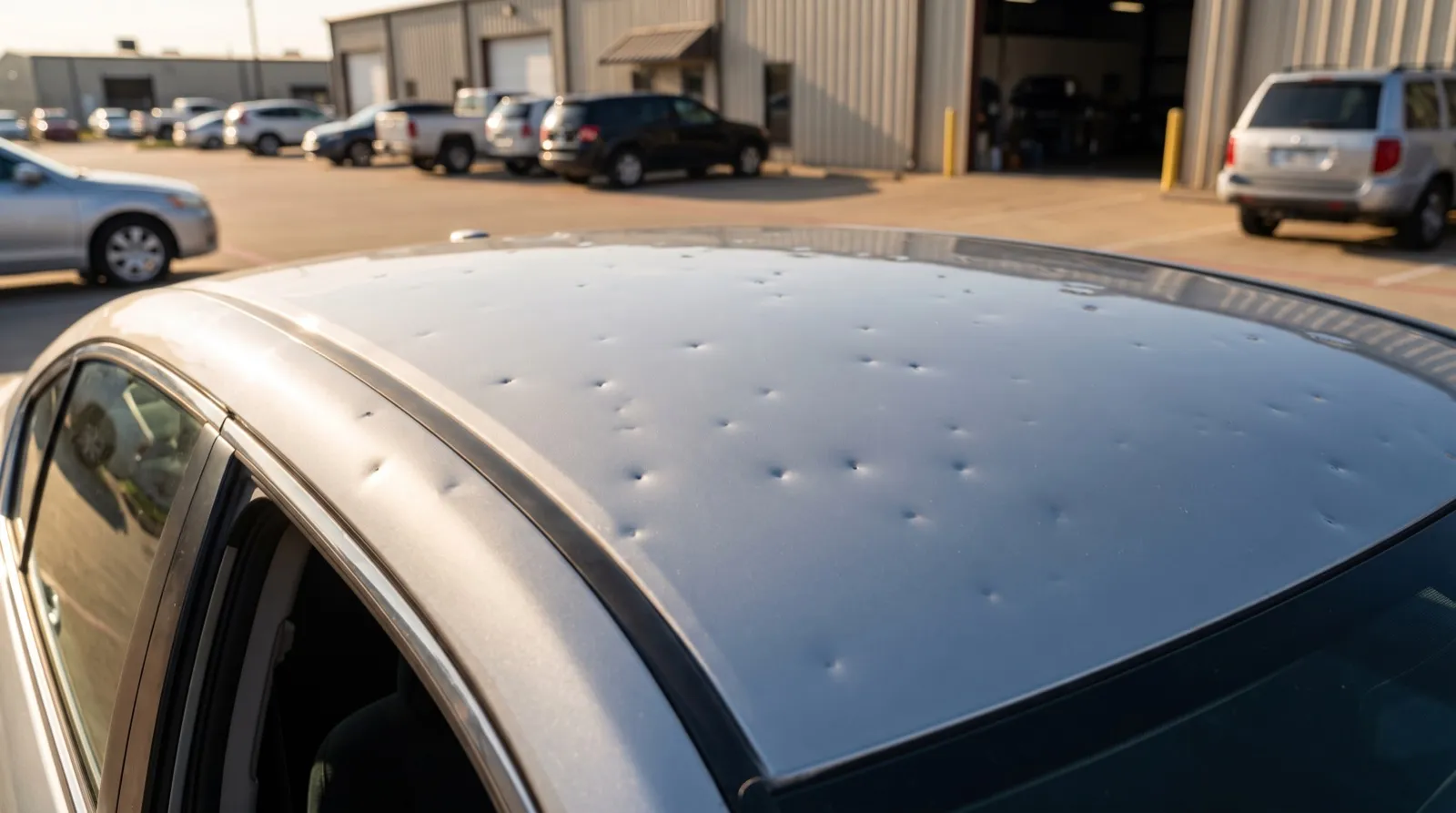
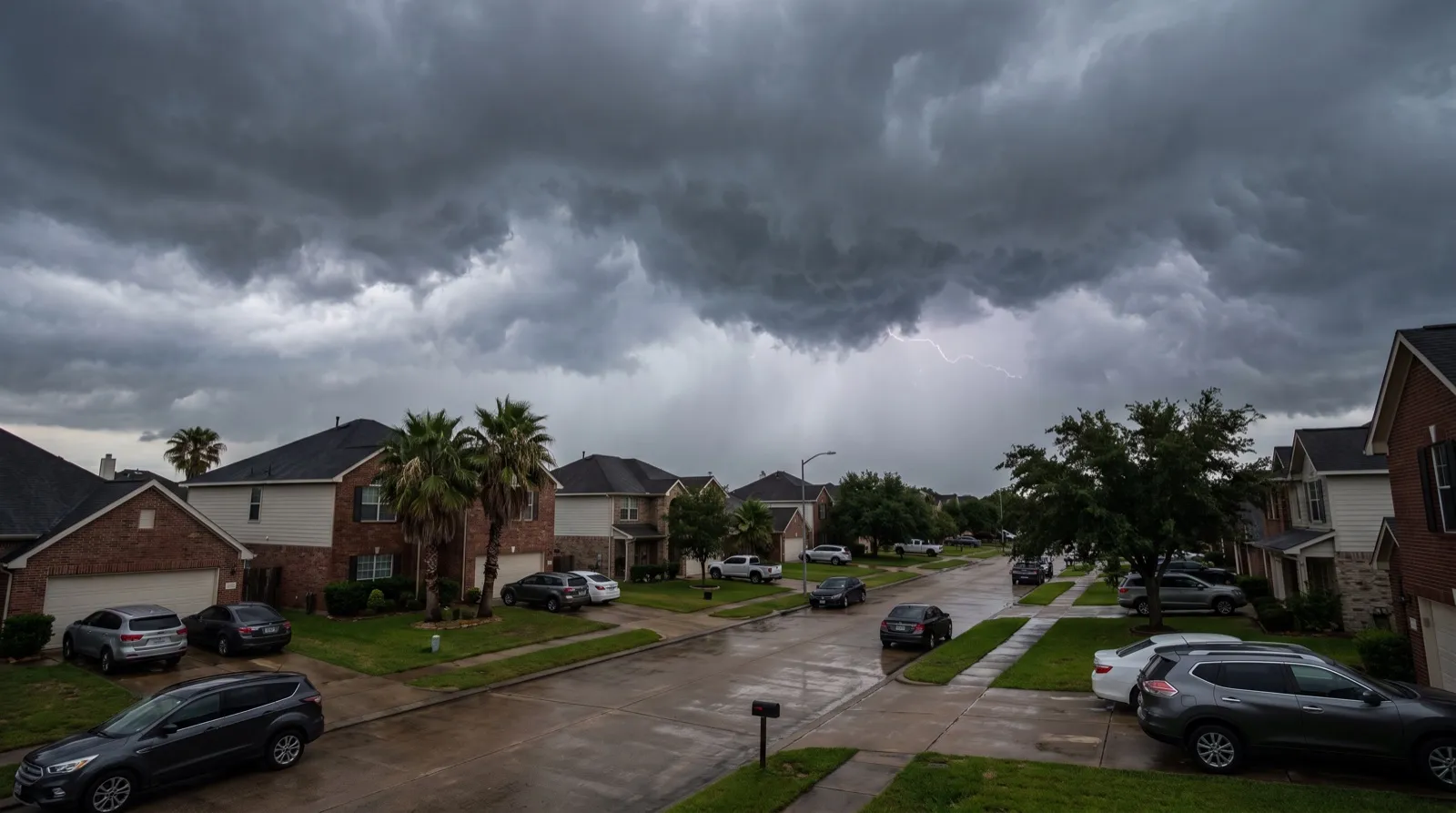
- Hail dents, which are usually small, round, and shallow. This is why PDR is the go-to for storm season. If a spring storm caught your car, our guide to hail damage repair in Carrollton and Princeton walks through exactly how that process works.
- Minor dents and dings from shopping carts, stray baseballs, and low-speed bumps.
- Shallow creases in the middle of a panel, where the tech has room to work.
The common thread is unbroken paint. If you run a fingernail across the dent and the finish is smooth with no cracks or chips, there's a strong chance PDR is on the table. That's the outcome we always hope for, because it's cheaper and faster for you and keeps your original finish where it belongs.
When Traditional Bodywork Is Necessary
Sometimes there's no shortcut, and trying to force PDR would only make things worse. Traditional bodywork is the right and necessary choice when we see:
- Cracked or chipped paint. Once the finish is broken, the area has to be refinished to seal it and stop rust. PDR can't restore paint that's already gone.
- Deep or sharp dents. Metal that's been stretched or kinked hard won't return to a clean shape by massaging alone.
- Damage on edges and panel seams. The stiff, reinforced areas along body lines and panel edges don't have the flex PDR relies on.
- Torn or gouged metal. Anything that punctured or ripped the panel needs filler or panel replacement.
- Collision damage, which often combines all of the above. If your car took a real hit, our breakdown of collision repair cost in DFW explains what goes into that kind of estimate.
None of this is a knock on your car. It's just physics. When the paint is broken or the metal is torn, proper bodywork is what restores both the look and the protection.
How 360PDR Decides
Every repair starts with a real inspection, not a guess over the phone. We look at the depth and sharpness of the dent, whether the paint is cracked, where the damage sits on the panel, and how the metal responds. From there we recommend the least invasive method that will actually fix the problem. If PDR will do it, that's what we quote, because it's better for your wallet and your paint. If the damage needs filler and refinishing, we'll tell you plainly and explain why.
It's also worth knowing that plenty of jobs use both. A fender might have three clean dents we can pop out with PDR and one cracked crease that needs a repaint. We'll handle each area with the right technique rather than forcing the whole panel down one path. You can see the range of work we do on our services page, and everything we complete is backed by our lifetime warranty.
Getting the Right Repair in Carrollton or Princeton
360PDR serves the Dallas-Fort Worth metroplex from two shops, in Carrollton and Princeton, with drivers coming to us from Plano, Frisco, McKinney, and Allen. Our promise is simple: we recommend the repair your car needs, not the biggest ticket we can write. Sometimes that's a quick PDR visit. Sometimes it's full bodywork. Often it's a smart mix of both. Either way, you'll get a clear estimate before any work begins.
Let's Get That Dent Handled
Book a free inspection and we'll show you the honest path to a factory-fresh finish, whether that's paintless dent repair, traditional bodywork, or both.
Get My Free Quote Prefer to talk? Call (972) 880-8083