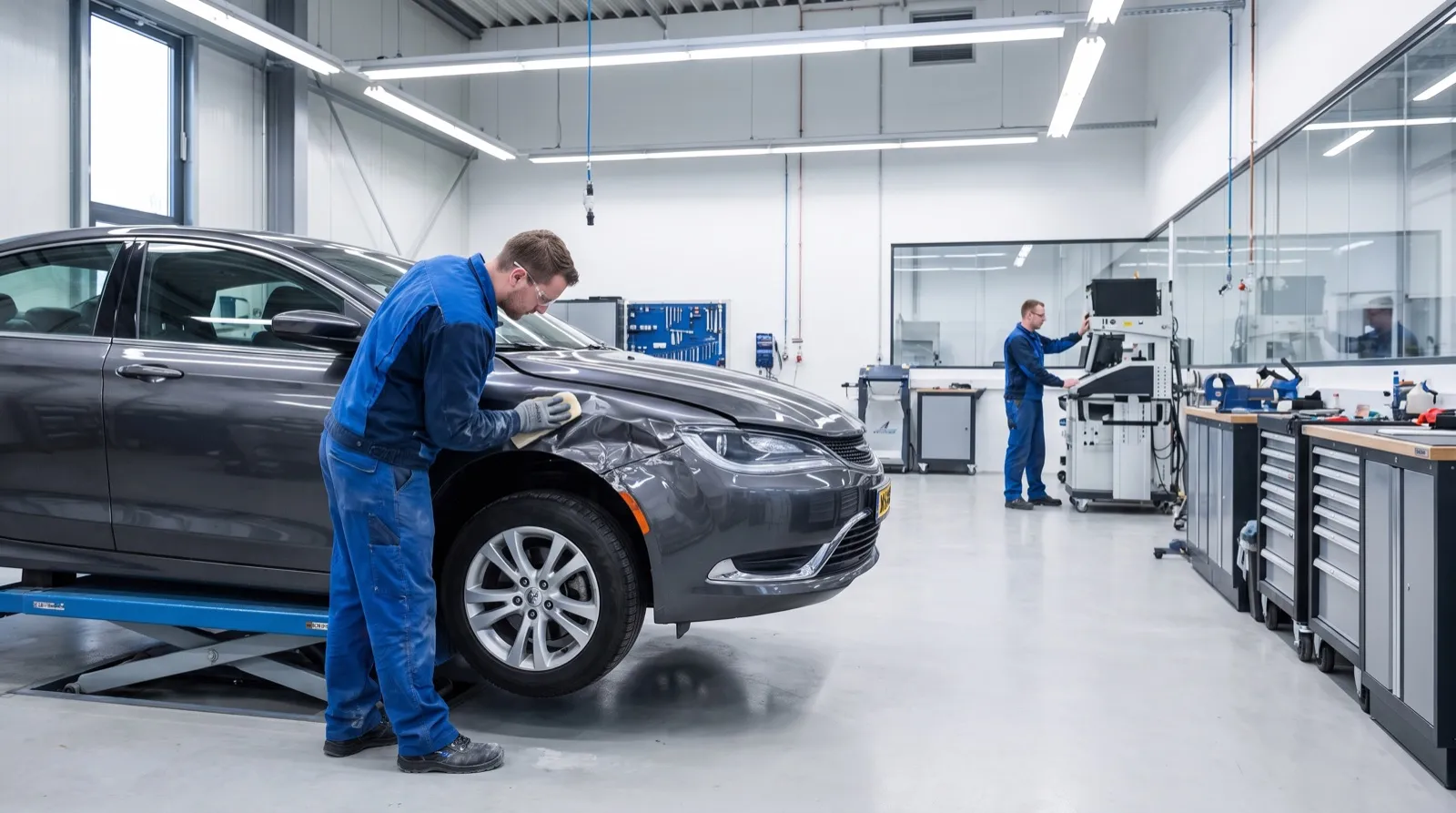
It's the first question almost everyone asks after a wreck: what is this going to cost me? The honest answer is that there is no single flat price for collision repair cost in the Dallas-Fort Worth area. Two cars that look equally banged up in a parking lot can carry wildly different repair bills once a technician gets underneath the panels. Body shape, hidden structural damage, the parts your vehicle needs, and how your insurance claim is handled all move the number. At 360PDR, we'd rather explain those factors up front than hand you a guess that changes later.
Below is a straight look at what actually drives the price of auto body repair, how a real collision repair estimate gets built, and why the lowest number on paper is not always the best deal for your car or your wallet. We serve drivers from Carrollton to Princeton and across the metroplex, so this is written for how repairs actually work here in DFW.
Why There's No Flat Price for Collision Repair Cost in the Dallas-Fort Worth Area
A fender bender in a Plano parking lot and a highway collision on I-35 are not the same job, even if both leave a crumpled bumper. Collision damage is layered. The dent you can see is often the least of it. What sits behind the panel, whether the frame shifted, and how many systems got knocked out of place are what set the real cost. That is why any shop that quotes you a firm price sight unseen is guessing. A trustworthy estimate starts with an inspection, not a phone call.
The Main Factors That Drive Auto Body Repair Cost
Every collision estimate comes down to a handful of variables. Understanding them helps you read a quote instead of just staring at the total.
- Severity and type of damage. A shallow scuff on a door is a different job than a caved-in quarter panel. Light cosmetic damage can sometimes be handled with paintless dent repair instead of full bodywork, which usually costs less and keeps your factory paint. Heavier impacts mean panel replacement, more labor, and more paint.
- Parts: OEM vs. aftermarket. Original equipment manufacturer parts are made by your carmaker and tend to cost more. Aftermarket parts are built by third parties and are often cheaper, though fit and finish can vary. Your policy and your preferences both play into which goes on the car.
- Paint and labor. Matching modern automotive paint is skilled work. Metallic and pearl finishes, multi-stage colors, and blending into adjacent panels all add time. Labor rates and paint materials are a real slice of any bumper repair or panel job.
- Hidden and structural damage. Crumple zones are designed to absorb impact, which means damage frequently reaches past the outer skin into brackets, mounts, and sensors. This is the part that surprises people, and it's why estimates can grow after teardown.
- Vehicle make and model. Parts for a common sedan are easier and cheaper to source than components for a luxury European car or a truck loaded with driver-assist sensors. The same dent costs more on some vehicles simply because the parts and calibration do.
- Frame and alignment work. If the impact moved the frame or threw off wheel alignment, that repair requires measuring equipment and precise correction. Frame damage is one of the biggest cost drivers there is, and it's also the one you least want a shop to skip.
Want a Real Number Instead of a Guess?
Bring your vehicle in or send us photos and we'll build you a clear, written collision repair estimate. Serving Carrollton, Princeton, and the whole Dallas-Fort Worth area.
Request a Free Estimate Or call us now: (972) 880-8083Quick Estimate vs. Teardown Estimate
There are really two kinds of collision repair estimate, and knowing the difference saves a lot of frustration. A quick estimate is based on what a technician can see and reasonably predict from the outside. It's useful for getting a ballpark and starting an insurance claim, but it can't account for damage hidden behind the bumper cover or inside the structure.
A teardown estimate comes after we remove damaged panels and inspect what's underneath. This is where hidden damage shows up: a bent reinforcement bar, a cracked mounting point, a sensor that needs recalibration. It's normal for a repair to be reassessed once the car is opened up, and a good shop documents every addition and reviews it with you and the adjuster before proceeding. If a quote seems suspiciously low, ask whether it's a visual estimate or a post-teardown one.
How Insurance Claims and Deductibles Affect What You Pay
Here's a distinction that trips people up: the total repair cost and the amount you personally pay are two different numbers. If you file an insurance claim, your insurer typically covers the repair minus your deductible. So a large repair bill might mean a much smaller out-of-pocket cost for you, depending on your coverage.
A few things worth keeping in mind as you work through a claim:
- Your deductible is the fixed amount you pay before coverage kicks in. If your repair costs less than your deductible, filing a claim may not make sense.
- Fault matters. In a collision, whether you file under your own collision coverage or the other driver's liability affects which deductible applies and who pays.
- You almost always have the right to choose your own repair shop in Texas. You are not obligated to use whichever shop your insurer names first.
- Adjusters and shops sometimes disagree on scope, especially around hidden damage and OEM parts. A shop that documents everything clearly makes that conversation far easier.
Because every policy is different, confirm your deductible and coverage details directly with your insurer. We help DFW drivers work through this process regularly, including sending documentation straight to adjusters so the repair keeps moving.
Why the Cheapest Estimate Isn't Always the Best
When you're staring at three quotes, the lowest one is tempting. But a rock-bottom collision repair estimate often reflects what was left out, not real savings. A shop might quote only the visible damage and skip the teardown, use the cheapest aftermarket parts, or plan to skimp on paint prep and blending. You feel that later, in mismatched paint, poor panel gaps, or a frame that was never properly measured.
Structural and frame work is not the place to cut corners. A vehicle repaired to look fine but left slightly out of alignment can wear tires unevenly, handle poorly, and perform worse in a future crash. The value in a good repair isn't just appearance. It's that your car is safe and holds together the way the manufacturer intended. That's also why keeping factory paint intact where possible protects resale, a point we cover in our guide on PDR versus traditional bodywork.
How 360PDR Estimates Collision Repair in Carrollton and Princeton
Our process is built to remove the guesswork. You reach out, we inspect the vehicle, and we build a written estimate that spells out parts, paint, and labor rather than a single lump sum. If a teardown reveals hidden or frame damage, we document it and review the updated scope with you before any additional work happens. When you're filing a claim, we coordinate directly with your adjuster so you're not stuck relaying messages between two parties.
360PDR serves the Dallas-Fort Worth metroplex from two locations, in Carrollton and Princeton, with drivers coming to us from Dallas, Plano, Frisco, McKinney, Allen, and beyond. You can see the full range of what we handle on our services page, and every collision repair we complete is backed by our warranty, so the work is built to last.
Get a Clear, Written Estimate Today
Don't settle for a number scribbled on a napkin. Our team will inspect the damage, explain every line, and work with your insurance so you know exactly where you stand.
Book My Free Estimate Prefer to talk? Call (972) 880-8083